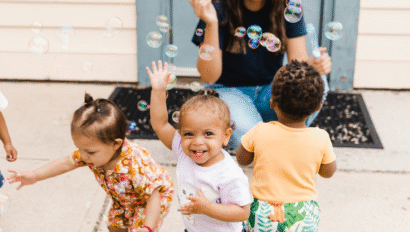
The Hidden Structure Behind Play: What Quality Looks Like in Practice
Quick Answer
High-quality play-based early childhood education is a beautiful balance of joyful discovery and intentional design. It’s a space where children feel the freedom to explore while being supported by a structured framework that builds social skills and critical thinking. Research shows that guided play, where adults shape the environment and offer gentle support while children lead, produces stronger learning outcomes than free play alone. The best programs balance joy and purpose, prioritize consistent teacher relationships above all else, and can clearly explain what children are building through every activity.
Play Is Learning. But Not All Play Is Created Equal.
If you have been researching play-based preschools in Ankeny, IA, West Des Moines, IA, or nearby communities, you have probably noticed that the term means something different everywhere you look. Some programs use it to describe open-ended free time. Others use it to describe a carefully structured approach to early childhood development. That difference matters a lot, and knowing what to look for helps you find the program that is truly the right fit for your child.
This guide walks you through what quality play-based learning actually looks like in practice, so you can walk into any tour with confidence and know exactly what questions to ask.
What the Research Actually Says About Play
There is a lot of enthusiasm around play-based learning, and for good reason. But it is worth understanding what the research actually supports, because it leads to a more nuanced and useful picture.
According to research published in the Encyclopedia on Early Childhood Development, free play, where children have unstructured time to explore on their own, offers real benefits like building attention and releasing energy. But when there is a specific learning goal in mind, free play alone is often not enough.
What the research points to instead is guided play: a form of child-directed play where a knowledgeable adult shapes the environment in advance and offers gentle, open-ended support along the way. Studies show that children in guided play settings learn new vocabulary, concepts, and skills at rates comparable to, and in some cases better than, direct instruction. The key is that children maintain the lead. The adult sets up the conditions for discovery without taking over.
What Quality Play-Based Learning Looks Like in Practice
When you tour a play-based program, you are looking for a specific kind of organized energy. Here is what that looks like.
A Space Designed for Imagination
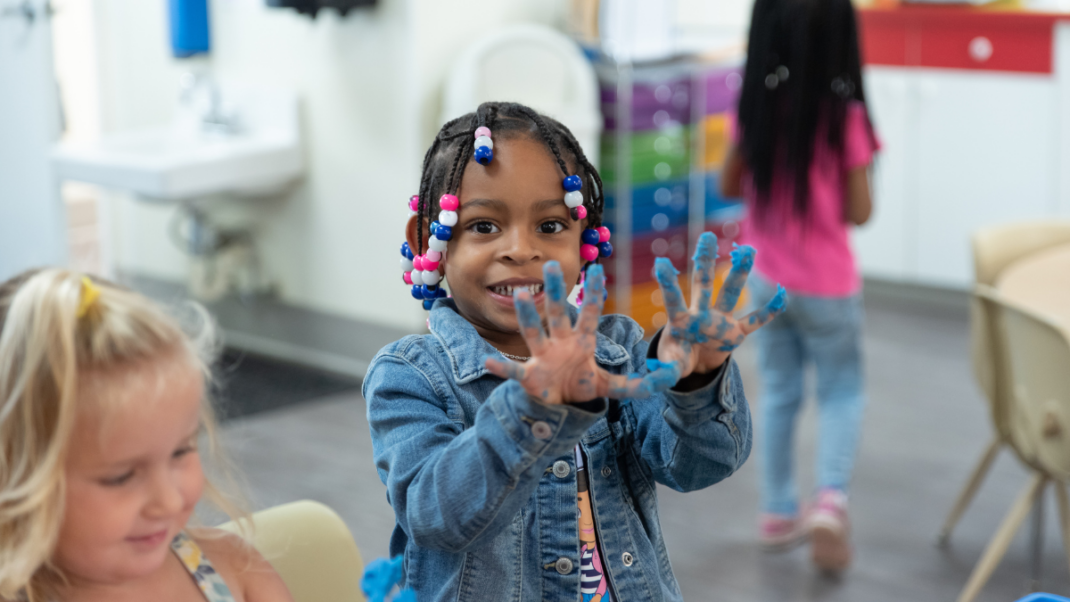
Walk into our daycare, and you’ll find a warm, family-centric atmosphere filled with sensory exploration. Every corner, from the building blocks to the art studio, is an invitation for your child to lead their own adventure. But look closer. There is intention behind every corner of that room. The dramatic play area connects to something the class has been exploring. The art station has open-ended materials, not coloring sheets. The sensory bin was set up with a purpose in mind.
Ask a teacher: “What are children working on this week, and how does today’s play connect to it?” A teacher who can answer that clearly is working in a program that knows what it is doing.
Intentional Planning Behind the Scenes
Strong play-based programs do not improvise. Teachers plan deliberately, building frameworks that guide which materials are available, what provocations are introduced, and which social skills are being practiced. The children experience freedom. The teacher has a plan.
This is one of the most important things to ask about, because it separates an intentional program from one that is simply relaxed. NAEYC, the National Association for the Education of Young Children, identifies intentional teaching as one of the cornerstones of high-quality early childhood programs. You can learn more at
NAEYC identifies intentional teaching as one of the cornerstones of high-quality early childhood programs.
A Genuine Focus on Social-Emotional Development
The early years are the critical window for social and emotional growth. How children learn to share, navigate conflict, regulate big feelings, and form friendships lays the foundation for everything that follows, academically, relationally, and in life.
In a well-run play-based classroom, teachers are actively coaching these moments. They are not just supervising. They are narrating, modeling, and supporting children through the hard stuff in real time. That work is not incidental. It is the curriculum.
Consistent, Trusted Teachers
We know that relationships and care are the foundation of growth. That’s why we prioritize consistent routines and long-term teacher relationships, ensuring your child feels safe, loved, and truly known every single day. Children need to feel known and trusted by the adults in their day. Consistency makes that possible. Ask about teacher tenure, how long staff have been there, and how the school handles transitions when a teacher leaves.
A warm, familiar teacher who has known your child for a full year is more valuable than any curriculum package on the market.
What the Classroom Environment Should Feel Like
Walk into a quality play-based classroom and you should feel a specific kind of energy: warm, purposeful, and a little bit joyful. Here is what to look for:
- Learning areas that are clearly organized with a purpose behind each one
- Open-ended materials that invite creativity rather than prescribe an outcome
- Children who look engaged and purposeful, not scattered or waiting to be told what to do
- Teachers who are down at child level, talking with children rather than managing from a distance
- A daily schedule visible somewhere in the room, showing children what to expect
- Evidence of children’s work displayed with care, not just decorating the walls
If the room feels chaotic without purpose, or overly rigid and quiet, either extreme is worth noting.
The Balance Families Are Looking For
Most parents choosing a play-based program want a specific balance. They want their child to be happy, creative, and socially confident. They also want to know that there is structure, safety, and real developmental progress happening.
Those things go together in a quality program. Structure does not mean rigidity. Routine gives children the security to take risks and explore more fully. Clear expectations free them to play with more intention. The best play-based programs hold both things at once: warmth and accountability, joy and purpose.
Frequently Asked Questions About Play-Based Learning
These are the questions families ask most often when evaluating play-based programs. We have answered them here so you can come to a tour already informed.
Is play-based learning actually preparing my child for kindergarten?
Yes, and research supports this strongly. The skills children develop through guided play, communication, emotional regulation, problem-solving, and the ability to focus, are precisely the skills that predict kindergarten readiness and long-term school success. A quality play-based program is not delaying academic preparation. It is building the foundation that academic learning rests on.
What is the difference between free play and guided play?
Free play is unstructured time where children choose what to do with minimal adult direction. It has real value, especially for building social skills and releasing energy. Guided play adds a layer of intentional adult support: the teacher shapes the environment in advance, introduces open-ended questions, and gently steers children toward a learning goal while keeping them in the lead. Research from the Encyclopedia on Early Childhood Development shows that guided play produces stronger learning outcomes than free play alone, particularly for vocabulary, math concepts, and critical thinking.
How do I know if a program is truly play-based or just using the label?
Ask the teacher to walk you through how they plan for play. A genuinely play-based program will have a clear answer: they will describe lesson frameworks, intentional material choices, and specific developmental goals behind each activity. If the answer is vague, or if the classroom looks like a worksheet-heavy environment with a play corner in the back, that tells you something important. The environment itself is your best guide.
What role do teachers play in a play-based classroom?
In a quality play-based classroom, teachers are active, attentive participants, not passive supervisors. They set up environments that invite exploration, observe children carefully, ask questions that extend thinking, and coach social-emotional skills in the moment. They are warm, present, and purposeful. The best way to evaluate this during a tour is to watch what teachers do during unscripted moments, during transitions, conflicts, or a child who needs comfort. Those moments tell you more than any brochure.
Come See It for Yourself
Touring a school is the best way to understand whether it truly lives out these principles. The classroom should feel warm and alive with purpose. The teachers should be able to tell you exactly what children are learning through every activity in that room. And your child should walk in and feel an immediate pull toward something that makes them want to explore.
Families in Ankeny, IA, West Des Moines, IA, and nearby communities choose 2forU Childcare because they see how play sparks curiosity, builds confidence, and helps children make sense of the world. We would love to show you what that looks like in person; schedule a tour today.
Related Posts
All Posts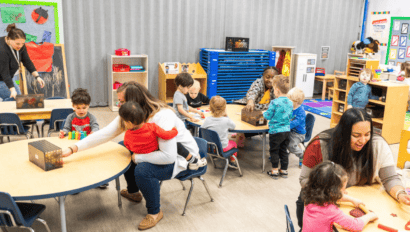
Beyond Free Play: The Skills and Milestones Behind Play-Based Curriculum
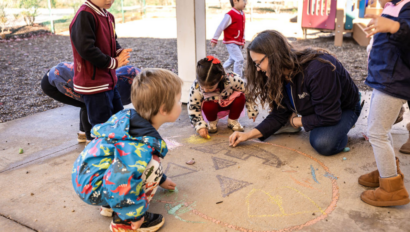
10 Simple Ways to Support Learning Through Play at Home